A solar eclipse occurs when the moon passes in between the sun and the Earth’s. The moon casts its’ shadow on the Earth’s surface and those lucky enough to be in its’ path will have a front row seat to a celestial spectacle.
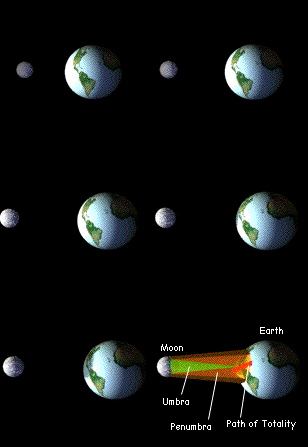
Image: NASA/ESA
On August 21st 2017 the moons shadow will pass from the pacific coast of Oregon to the atlantic coast of South Carolina. The shadow will sweep across the USA in 93 minutes at an average speed of 2,288 mph. It is estimated that 12 million people live in the direct path of the moons’ umbral shadow (about 68 miles in diameter) with many more living within an accessible distance. This promises to be one of the most observed total eclipses.
For those unable to position themselves on the eclipse path the moons’ immense penumbral shadow will ensure that many more will experience a partial eclipse. A slight partial eclipse will even be visible from some parts of the UK.
Although eclipses have been occurring since before humans were introduced to the Earth, eclipses have become a much more accessible phenomenon. We know accurately when and where eclipses will occur and everyone has the ability to view and eclipse safely and even to record and share the event.
In future posts we will be helping you to get the most from your eclipse experience. For the millions of people viewing an eclipse for the first time, how can you make the most of the brief moments of totality. The 2017 eclipse will provide a maximum of 2 and half minutes of totality for those positioned at the widest point of the moons’ umbral shadow.
Please visit frequently and be sure to follow us on the various social media channels that we have linked to below.
References: